
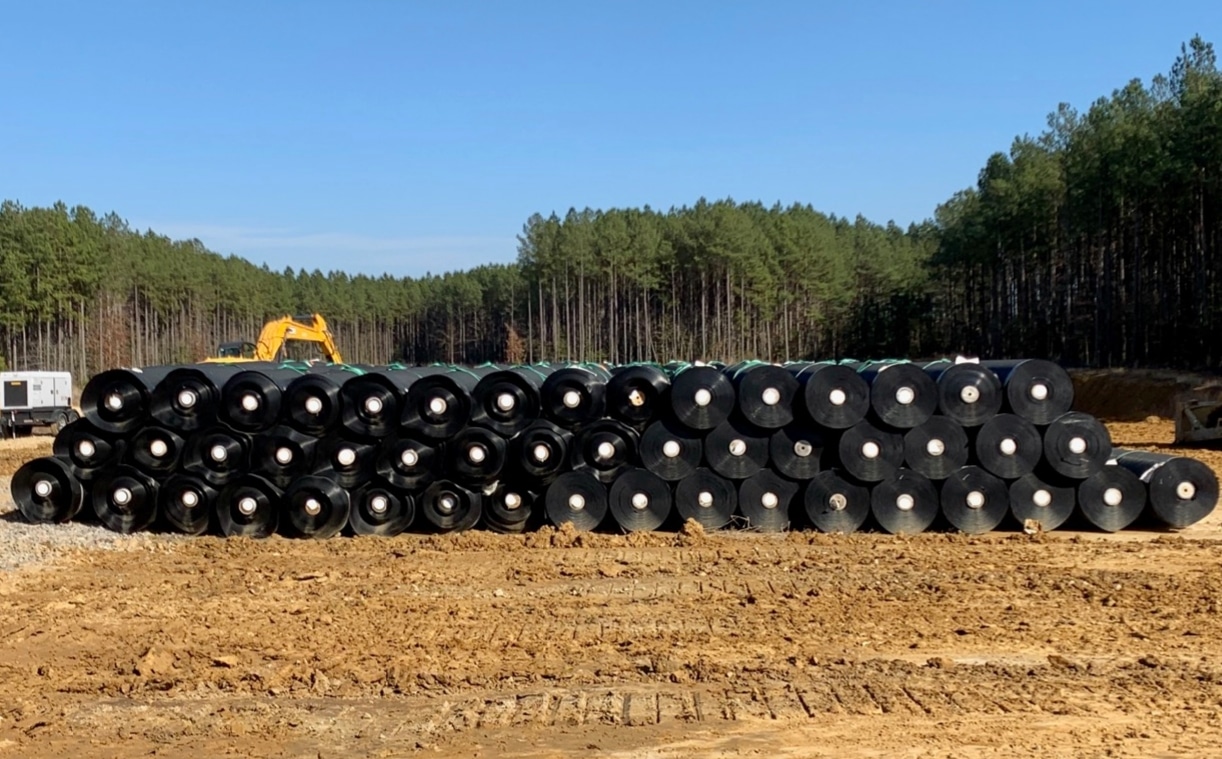
Material Storage – It Matters!
Some geosynthetics are manufactured to withstand long term exposure to the elements, extreme temperatures, and puncture resistance. With this is mind, proper on-site material storage

Some geosynthetics are manufactured to withstand long term exposure to the elements, extreme temperatures, and puncture resistance. With this is mind, proper on-site material storage
Implementing best practices during the installation of geosynthetic materials is crucial for ensuring their effectiveness and longevity. Proper techniques can significantly reduce the risk of failures and enhance the performance of the materials in various applications.
For instance, ensuring a clean and stable subgrade before installation can prevent potential issues such as wrinkling or inadequate anchorage. Additionally, following manufacturer guidelines for overlaps and seams can help maintain the integrity of the installation, making it more resilient to environmental factors.
While installing geosynthetic materials, professionals often encounter a range of challenges that can impact the success of their projects. Understanding these challenges is essential for mitigating risks and achieving optimal results.
Some common issues include adverse weather conditions, which can affect material handling and installation quality, and site-specific factors such as soil composition and drainage requirements. By anticipating these challenges and preparing accordingly, teams can implement effective solutions to maintain project timelines and quality standards.
Geosynthetic materials come in various types, each designed for specific applications in construction and environmental management. Understanding the properties and uses of these materials is vital for selecting the right solution for a given project.
For example, geotextiles are commonly used for filtration and separation, while geomembranes are essential for containment applications. By familiarizing oneself with these materials, professionals can make informed decisions that enhance project efficiency and effectiveness.
After installation, ongoing maintenance and inspection of geosynthetic materials are critical to ensure their performance over time. Regular checks can help identify potential issues before they escalate, prolonging the lifespan of the installation.
For instance, inspecting for signs of wear, damage, or displacement can help maintain the integrity of the installation. Implementing a routine maintenance schedule that includes visual inspections and necessary repairs can significantly enhance the durability and functionality of geosynthetic applications.